Welcome to the 2013 Iowa State Fair!

August 8-18, 2013

Click here to Plan Your Next Event at the Iowa State Fair Grounds

1919-1929

1919-1929

The “Victory Fair” in 1919 was the largest Fair to date and featured the theme “Food Won the War.” Because Des Moines hotels could not accommodate the greatly increased number of Fairgoers (408,147), 100 acres were turned into Campgrounds. (The Fair’s Campgrounds now boast 160 acres and nearly 1,800 spaces with electrical hook ups and hundreds more without.) The Legislature appropriated $54,000 for the purchase of 41 acres to the north of the Grandstand. Officials noted “inasmuch as the war was over a greater portion of the boys had returned” so that the Fair was held under most favorable conditions.

The Cattle Barn and Sale Pavilion, still used today, were completed for the 1920 Fair. Judges pronounced them “practically ideal.” Attendance for evening Grandstand performances was above 12,000 for most events. “One of the outstanding features of the machinery exhibit was the motor-driven and motor-drawn vehicle and implements,” officials remarked.

“Work and Prosper” was the theme of the 1921 Fair. Fairgoers could spend hours marveling at exhibits, lectures and demonstrations in the Women and Children’s Building and not see all that was offered. Items of interest ranged from a proper nutrition class to instruction on how to freshen up hat trimmings. Entertainment highlights included an auto to airplane transfer by Ruth Law, balloon races and hippodrome shows.

More than 550 babies entered the Baby Health Contest in 1922. Judging was started a day earlier in order to complete the competition on schedule. The contest, which weighed, measured and closely examined children before determining the “most perfect winners” continued until about 1951. Miss Bonnie Murray of Sioux City was chosen the most beautiful girl in Iowa from among more than 6,200 young ladies. The National Horseshoe Pitching Tournament lasted several days. Gate admission was reduced from 75 cents to 50 cents. Two locomotives traveling at 10mph crashed into each other in the second staged train wreck at the Grandstand. The Floriculture Department was discontinued due to building disrepair.

Rain on six of the eight days of the 1923 Fair deterred visitors. The new Baby Beef Barn (now part of the Sheep Barn) provided housing for more than 500 head, the largest display of baby beeves ever assembled by the Iowa Boys and Girls Clubs. For the first time in history, the “exact pulling power of a team of horses could be measured accurately and scientifically with the newly invented ‘horse power dynamometer’ perfected by the Engineering Department of the Iowa State College in Ames,” officials noted. A new feature was added to the program in front of the Grandstand: the “Loud Speaker.” The big attraction was the “Tokyo” fireworks display depicting the 1923 earthquake.

The 1924 Fair was known as the 70th anniversary jubilee, marking the seven decades since the first Fair. Mr. J.S. Shepherd and Mrs. Eliza G. Rhodes were honored as the oldest man and woman who had attended the 1854 Fair. A motion picture of the jubilee was taken and available free of charge to Farm Bureau meetings, county institutions and like events. An American Kennel Club recognized pedigreed dog show was held for the first time. A new “electrolier” street lighting system was used on Grand and Rock Island Avenues to make them almost as bright as day. The newly-constructed 15,000-square-foot balcony in the Agriculture Building was used for a dairy exhibit. More than 500,000 gladiolus blooms were on display in one of the largest shows ever in the U.S.

Two world records were established in draft horse team pulling in 1925. Overall attendance records were broken during the 10-day run, attracting nearly 408,000 visitors, almost one-sixth of the entire state population. Nearly $24,000 was spent on advertising. Admission was 75 cents. More than 100 people entered the new fiddlers’ contest. (This contest continues today.) However, high heat and hot sun kept spectators out of the Grandstand. As a result of the national recognition the Fair had been receiving, the Iowa State Fair became the Iowa State Fair and National Livestock Show.

A notable feature of the 1926 Fair’s livestock show was the large number of new herds; fully 25 percent of exhibitors were first-timers. More than 450 babies were scored and given thorough health examinations during the popular Baby Health Contest. The Hog Calling contest debuted. While receipts fell somewhat from the year before because of heavy rain, $19,000 in revenue was still tallied.

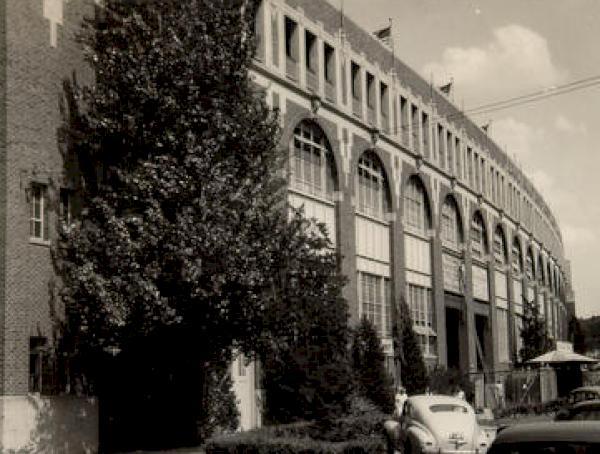
Ten days of perfect weather made 1927 the most successful in the Fair’s 73-year history. The Education Building addition to the Grandstand constructed with special appropriations was a great attraction with its second floor art gallery and 90,000 square feet of exhibits. Today the additions are known as Shoppers’ Mart and the Halls of Law and Flame. Special grounds exhibits of radios, farm refrigerators, milking machines, hen houses, washing machines and scores of other modern conveniences were powerful attractions. Both Colonel Charles Lindbergh and Clarence Chamberlin visited the Fair in 1927, following their Atlantic triumphs. John Philip Sousa’s famous band attracted the largest Sunday throng in the history of the Fair.

More than 15,000 people paid to see the Fair’s first aircraft show in 1928, held in a 90 by 300-foot tent. The outstanding feature was the famous Lockheed-Vega, which Captain Sir George Wilkins and Lieutenant Ben Eielson had flown across the North Pole the spring before. The fireworks spectacular illustrated “A Night In Baghdad,” thrilling Grandstand audiences. While the Fair was successful overall, bad weather and the lateness of the threshing season slowed attendance.

The year 1929 marked the Fair’s Diamond Jubilee (75 years), the biggest Fair of all up to that time. All previous records in attendance, financial returns and exhibits were broken. A new $60,000 addition to the Horse Barn (originally started in 1914) was rushed to completion. Premiums offered totaled more than $142,000. A pageant of transportation beginning with Native Americans using horses and dragging poles (travois), prairie schooners, wagons made before the era of springs, stagecoaches and ox carts continued all the way to modern autos and aircraft. The first statewide woodchopping contest was held. More than 15,000 Iowa boys and girls contributed nickels and dimes to purchase a baby elephant in cooperation with The Des Moines Register and Tribune and the Fair. The pachyderm was christened Baby Mine on Children’s Day.